
For a brief moment, doxycycline post-exposure prophylaxis — “doxyPEP” — looked like one of the most promising new tools in sexual health. A single 200 mg dose of doxycycline taken within 72 hours of unprotected sex; a landmark 2022 trial in the New England Journal of Medicine showing roughly two-thirds reductions in chlamydia and syphilis, and around 55% reductions in gonorrhoea among men who have sex with men and transgender women. Public health departments in California and elsewhere moved quickly to roll it out. Now, a new study in The Lancet Infectious Diseases suggests the gonorrhoea half of that promise has already evaporated.
What the new study found
The new analysis is a retrospective, test-negative observational study of more than 12,000 N. gonorrhoeae test episodes across a large Kaiser Permanente cohort in southern California, covering the period before and after statewide doxyPEP implementation in late 2023.
The headline numbers:
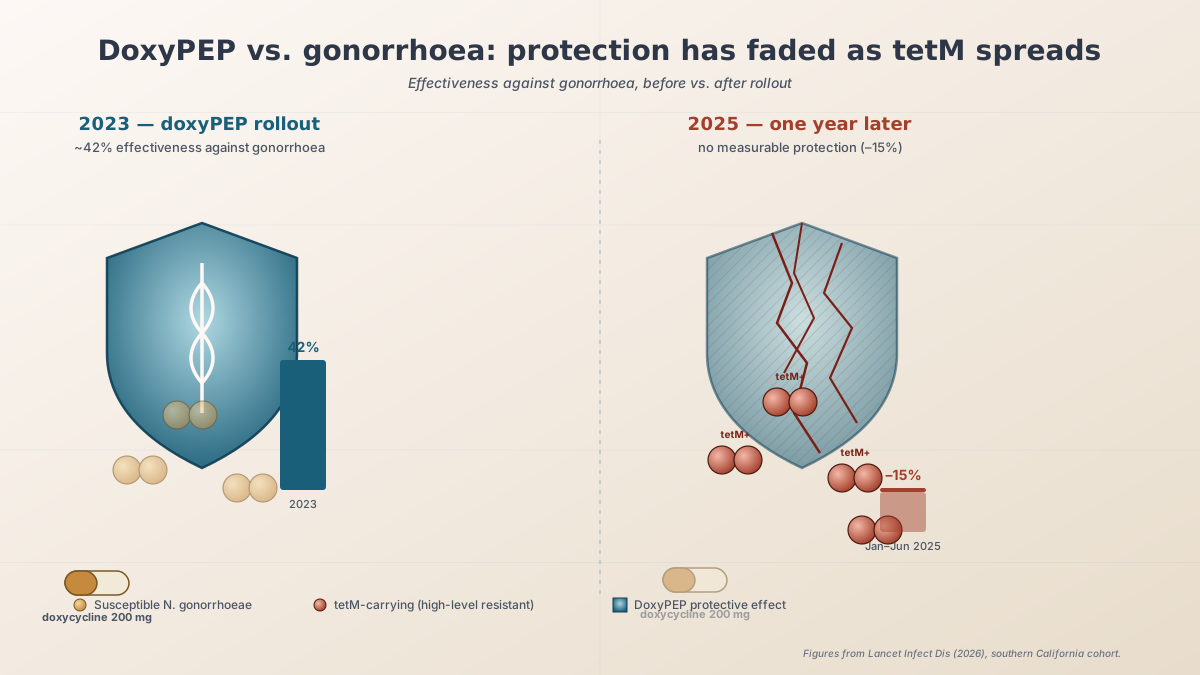
- Before rollout: doxyPEP was associated with around 42.3% effectiveness against gonorrhoea — roughly in line with the 2022 NEJM trial.
- First half of 2025 (within a year of rollout): the point estimate fell to –15%. In plain language, the protective effect was no longer detectable.
- Chlamydia and syphilis effectiveness held up — both remained in the same protective range as the original trial.
In other words, this isn’t a “doxyPEP doesn’t work” finding. It’s a gonorrhoea-specific failure. The drug is still doing its job against the other two main bacterial STIs it was tested against.
Why the protection collapsed: the tetM gene
The leading explanation is genomic, and it tracks closely with the timing of the rollout. N. gonorrhoeae has been quietly acquiring tetM, a plasmid-borne gene that confers high-level tetracycline resistance. Doxycycline is a tetracycline. If you’ve ever wondered how resistance moves so much faster than evolution should allow, this is the answer — bacteria share resistance genes between strains and species, rather than waiting to mutate them (we wrote about exactly this mechanism in the cinnamic-acid post).
The surveillance data on tetM is striking:
- US sequences: fewer than 10% carried tetM before 2020 → over 30% by Q1 2024.
- A Seattle sexual health clinic: tetracycline-resistance gene prevalence went from 27% in 2017 to roughly 70% by mid-2024.
- European surveillance across 22 countries in 2024: 62.3% tetracycline-resistance prevalence in gonorrhoea isolates.
Trial-level data points the same way. In one analysis, men using doxyPEP were significantly more likely to be infected with high-level tetracycline-resistant N. gonorrhoeae than men not using PEP — 35.5% versus 12.5%. That doesn’t prove doxyPEP single-handedly caused the resistance — increased general use of doxycycline for chlamydia treatment is also part of the picture — but it makes the “we’re applying selective pressure” interpretation hard to escape.
What this means for doxyPEP guidance
The European CDC issued cautious 2025 guidance flagging the resistance trade-off, and the broader public-health conversation has shifted from “should we expand doxyPEP?” to “how do we use it without accelerating gonorrhoea resistance?”. A few things are worth being clear about:
- DoxyPEP is still effective against chlamydia and syphilis. Both are common, both have real complications when untreated, and the case for short-term prophylaxis against those infections has not gone away.
- For gonorrhoea specifically, doxyPEP can no longer be relied on in populations where tetM is widespread. That’s increasingly true in the US and parts of Europe; surveillance data in Asia is patchier.
- The bigger, harder question is at the population level: does doxyPEP prevent enough individual STIs to offset the resistance it appears to drive in gonorrhoea — and potentially in other organisms (staph, gut flora, commensal Neisseria) that don’t always announce themselves? The honest answer in 2026 is that we don’t yet know, and the data are moving fast.
What this means in our practice
DoxyPEP is not a routine part of sexual health care in Malaysia today. Where it comes up in our consultations is usually in patients who have read about it overseas, are returning from PEP programmes abroad, or are asking whether they should be self-medicating with leftover doxycycline. The short version of what we tell them now:
- Don’t self-prescribe doxycycline as PEP. Doing so on a routine basis, without surveillance data on local resistance, risks the same trajectory we’re watching in California — possibly faster, because you’re an audience of one with no monitoring.
- Standard screening still matters more than prophylaxis. Regular STI testing, prompt treatment, partner notification, and condom use remain the most reliable tools, especially as antibiotic resistance complicates the back-end treatment of any infection you do pick up.
- If you’ve taken doxyPEP overseas and have symptoms, tell us. Knowing what antibiotics you’ve recently been exposed to helps guide testing and treatment decisions.
The broader lesson is the one antibiotic resistance keeps trying to teach: every new drug or new use buys us a window, and the bacteria close it. Sometimes faster than we expect.