
Most of what we see in a Malaysian dermatology and STD clinic is bread-and-butter: eczema, acne, tinea, common STIs. Occasionally a case report from elsewhere in the world stops you in your tracks, and this is one of them.
The case
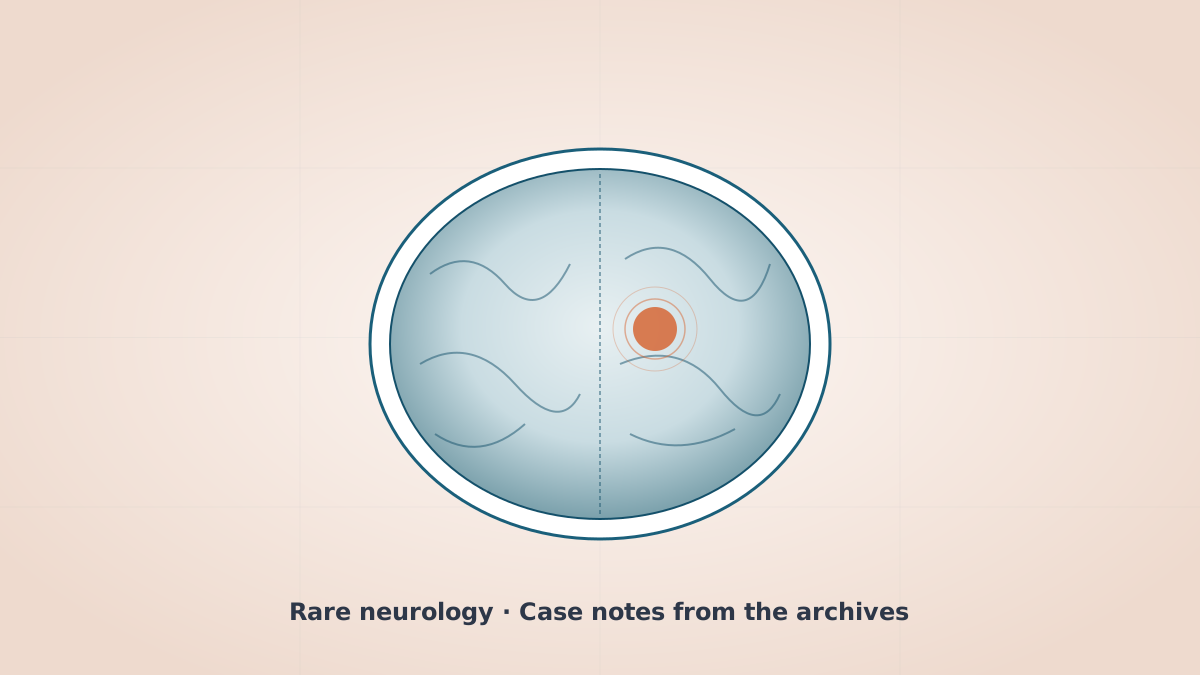
British researchers, reported by The Star in late 2014, described an unusual tapeworm extracted from a man’s brain. The parasite had been living there for approximately four years, during which time it migrated roughly 5 centimetres from one side of the brain to the other — a journey tracked across a series of MRI scans. The species was Spirometra erinaceieuropaei, previously reported only a handful of times in humans.
The patient’s symptoms had been vague: headaches, occasional seizures, memory problems. Initial imaging suggested a possible tumour, but the diagnosis remained elusive until the parasite was surgically removed. Researchers then sequenced its genome — one of the first times this species had been characterised genetically.
How does this even happen?
S. erinaceieuropaei is found primarily in Asia. Humans become accidental hosts, typically through:
- Drinking water contaminated with tiny crustaceans carrying the parasite’s larvae.
- Eating raw or undercooked meat of frogs, snakes, or other intermediate hosts.
- Traditional medicine practices involving the use of raw frog flesh as poultices — a documented route in parts of Southeast Asia.
Once ingested, the larvae can burrow through tissue and, rarely, end up in the central nervous system.
Why mention this in a skin clinic blog?
Two reasons. First: rare is not zero. For patients travelling in Southeast Asia (including rural Malaysia), or for anyone with unusual chronic neurological or skin symptoms following international travel, parasitic infection deserves at least a thought. Dermatologists sometimes catch parasitic disease first when it surfaces in skin lesions.
Second: this is a reminder of why safe food and water practices, and proper meat cooking, remain non-negotiable even in modern, urban settings. The zoonotic world has not gone away — it’s just been pushed to the margins for people with reliable food systems.
If you have unexplained chronic symptoms — especially after travel, consumption of wild meat or unfamiliar foods, or suspicious insect or animal exposure — a thorough evaluation is worth the time. Don’t self-diagnose parasites from the internet; do ask your doctor.