
Syphilis carries a particularly tangled history. For centuries, its origin was blamed on Columbus’s sailors returning from the Americas in the 1490s — a claim that got wrapped up with racism, xenophobia, and moralising about who “gave” whom the disease. A new ancient-DNA study published in Science is now straightening out those twisted roots, and the story it tells is far older than the 16th century.
A 5,500-year-old skeleton, and the bacterium in its bones
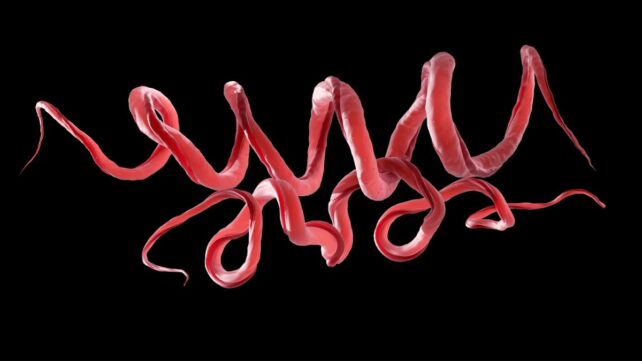
The find comes from an archaeological site in Colombia. Researchers, led by evolutionary genomics researcher Davide Bozzi, recovered DNA from a skeleton roughly 5,500 years old. The DNA came from Treponema pallidum — the spirochete bacterium responsible for syphilis, and also for related treponemal diseases like yaws, bejel, and pinta.
The strain, named TE1-3, doesn’t circulate today. Based on its genome, it sits on a very old “early-diverging sister lineage” that branched off before the subspecies behind modern syphilis, yaws, bejel, and pinta emerged and spread around the world.
That pushes back the known history of treponemal disease by roughly 3,000 years.
Where did syphilis come from?
The “Columbian exchange” narrative — that Columbus’s crew brought syphilis from the Americas to Europe in the late 1400s, triggering the first major European outbreaks — has long been one of two competing theories. The other is that treponemal diseases existed in Europe well before Columbus, and the 16th-century outbreak was simply a new variant or a changed mode of transmission.
This study doesn’t end that debate, but it adds weight to the American side of it. The researchers estimate that TE1-3 diverged from other T. pallidum lineages roughly 13,700 years ago — long before agriculture and dense human settlements. In other words, contagious diseases were already circulating among hunter-gatherer communities.
It’s still unclear whether TE1-3 spread through sexual contact like modern syphilis, or through skin contact like yaws and bejel. But its genome already contained virulence genes present in modern strains, so it was harmful to its hosts.
What this changes — and what it doesn’t
Two commentators on the research, anthropologists Molly Zuckerman and Lydia Bailey, make an important broader point. “Framing Treponema origins through geographic binaries, such as ‘Old World’ versus ‘New World,’ obscures the ecological realities,” they argue. Pathogens aren’t neatly tied to one continent or one population — they move with their hosts, adapt to new conditions, and change how they cause disease over time.
The authors of the new study put it bluntly: “Our findings show how even a single ancient pathogen genome can shift current understanding of pathogen emergence.”
Why this matters in a modern STD clinic
Rates of syphilis are rising again globally, including in Malaysia. Understanding the deep evolutionary history of T. pallidum is not an abstract academic exercise — it reminds us that this is a highly adaptable pathogen with a long co-evolutionary relationship with humans, capable of shifting transmission modes and disease presentations under different conditions.
For patients, the takeaways remain the same as always: safe sex practices, regular STD screening if you have multiple or new partners, and prompt evaluation of any unexplained skin rash, genital ulcer, or sore. Syphilis is still treatable with penicillin, and it is still quietly common. If you’re unsure, come in for a confidential check.